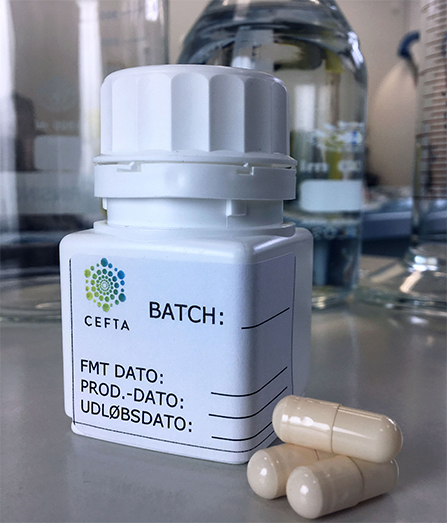
Faecal microbiota transplantation (FMT) is a medical treatment
where intestinal microbiota is transplanted to the intestines of a patient,
using faeces from a healthy donor.

FMT is considered for patients with recurrent C difficile infection in all Danish hospitals.
The use of FMT in Denmark is described in a National Danish clinical guideline, published in 2021 following joint consensus between four scientific societies:
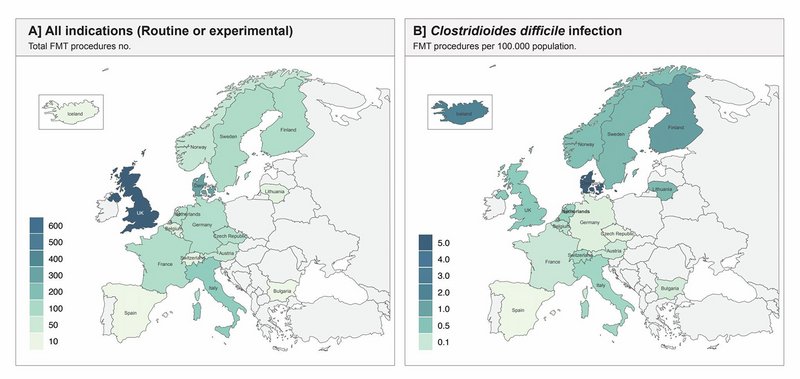
FMT is used in routine clinical care and in experimental studies throughout Europe.
At present, the use of FMT in Europe is unevenly distributed, demonstrated in a Europe-wide survey conducted in 2020.
All academic institutions in Europe are invited to join the EurFMT network that currently counts more than 35 centres from 19 European countries. Access the EurFMT including newsletters and links here.
European Microbiota newsletter: Within the European FMT Network, we issue four European FMT newsletters each year. Access the newsletters and subscribe for future newsletters here.
FMT framework, CEFTA – Jørgensen 2017
FMT capsule protocol, CEFTA – Hansen 2024

The Council of Europe issues the technical guide for the safety and quality of tissues and cells for human application. The guide was thoroughly revised in 2022, including the adaptation of a thoroughly revised chapter on intestinal microbiota.
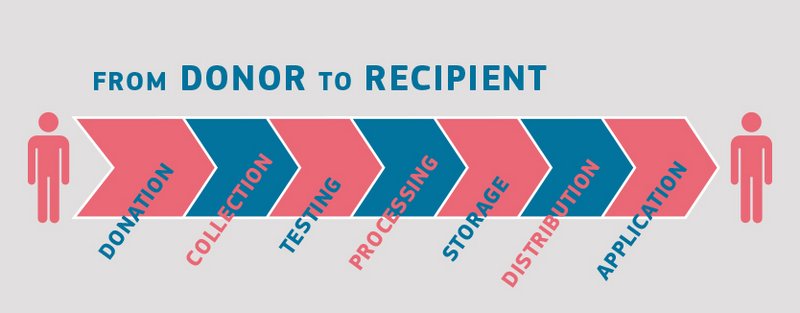
Substance of human origin (SoHO) is a term applied by the European Commission to embrace blood, tissues, cells, organs and human-derived material such as breast milk and intestinal microbiota.
Following five years of preparation, the new SoHO regulation was issued in July 2024. The SoHO regulation will be implemented over the next three years for full effect in 2027. Read about the process here and see the SoHO regulation here.
The SoHO Coordination Board (SCB) provides an overview of the preparation for the full implementation as well as key documents. Follow the SoHO Coordination Board here.

Intestinal microbiota is a key determinant of human health. The synergy between host and microbiome affects diseases in all tissues of the human organism. Development of diseases such as Crohn’s disease, multiple sclerosis, diabetes mellitus, and obesity is linked to disturbances in the intestinal microbiome, termed dysbiosis. It is not clear if dysbiosis causes disease or rather develops as a consequence of disease.
Since two multicenter studies in Europe and USA (MetaHIT and Human Microbiome Project) provided in-depth analyses of the human intestinal microbiota, using next-generation sequencing methods, our understanding of “our other genome” has increased massively. We now know multiple ways to modulate the intestinal microbiome, using either diet, medications such as antibiotics, cultured microorganisms (probiotics), or faecal microbiota transplantation.
Our microbiomes are under constant development, and attempts to conserve microbiota for the future include the microbiota vault.
Use of medical treatments is best investigated by clinical trials. ClinicalTrials.gov is a public registry of ongoing clinical trials, currently including more than 100 trials investigating the use of FMT in humans.
Results from clinical trials are published in scientific journals following peer review. Findings from different trials may be combined and analysed in systematic reviews and meta-analyses. Find CEFTA publications of clinical trials, systematic reviews, and meta-analyses under “Publications”.